Published on
Panel discussion hosted by Financial Research Institute on distressed water and wastewater systems cites need for multi-pronged approach in addressing national water infrastructure crisis
(This story appeared in the September 2026 issue of Public Utilities Fortnightly)
Addressing the nation’s complex challenges of distressed water and wastewater systems requires careful assessment, strong community engagement, and flexible approaches tailored to local conditions.
Such was one of the top takeaways from a panel organized by the Financial Research Institute (FRI) on July 21 in Minneapolis, bringing together regulators, public utility commissioners, municipal leaders, consumer advocates and water utility representatives for a discussion on distressed water and wastewater systems. The panel was held in conjunction with the 2026 National Association of Regulatory Utility Commissioners (NARUC) Summer Policy Summit.
As if to underscore the need for a multi-tiered approach, the panel included a diverse collection of voices, including Ryan Silvey, vice-president of public policy and communication for Central States Water Resources; Sarah Leeper, president of both California American Water and Hawaii American Water; Ed Lodge, commissioner and president of the Idaho Public Utilities Commission; Karen Stachowski with the Consumer Advocate Division of the Tennessee Attorney General’s Office and Bob Dandoy, mayor of Butler, Pennsylvania. The panel was introduced by Dr. Adrienne Ohler, Associate Director of Policy Research at FRI, and moderated by Commissioner Erik Helland of the Iowa Utilities Commission and a member of the FRI Advisory Board.
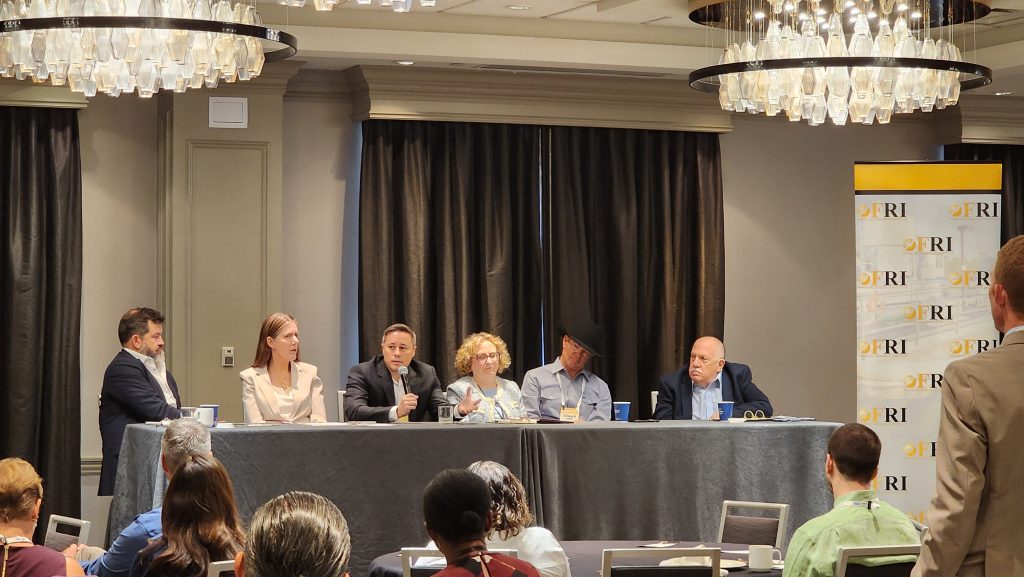
With multiple operational challenges facing the industry, Leeper, President of California and Hawaii Water, characterized the current plight of water systems in the U.S. as a “perfect storm.”
“You have aging and diverse infrastructure, financial capacity restraints, workforce shortages,” said Leeper. “There is also escalating regulatory compliance, with tightening water quality standards and increasing cybersecurity mandates raising operational costs. It’s all of these things, all at once.”
She stressed that proactivity in addressing these challenges is essential, like identifying failing systems early through partnerships with state water boards and utility commissions before catastrophic service failures occur.
One approach could involve consolidation. Silvey outlined Central States’ business model of acquiring failing, non-compliant systems and investing capital to restore compliance across multiple states.
“Our model can help shift the way the public views rate consolidation, which includes framing water infrastructure as essential public infrastructure like roads and highways,” he said. “This way, costs are shared broadly across customer bases.”
Silvey, a former state legislator and member of the Missouri Public Service Commission, further went on to lament some of the things he wished he knew when he was a regulator, including the current state of water infrastructure and the need to tour more acquisitions just to know how bad a shape some of these systems were. He mentioned “acquisition premiums” as an important facilitator of the acquisition process, because they help move systems into organizations with stronger operational and financial capacity, facilitating needed infrastructure investment.
Stachowski, of the Tennessee AG’s Office, emphasized that while acquisitions could be useful, they are not a silver bullet, urging cross-agency collaboration among environmental agencies, state utility boards, and comptrollers.
“It’s important that commissions evaluate the full rate impact on existing and incoming customers at the time of acquisition rather than deferring the evaluation to later rate cases,” she said.
Lodge, of the Idaho Public Utilities Commission, shared the perspective of fast-growing rural states where small water systems suddenly faced population increases after the 2020 pandemic. And Mayor Dandoy of Butler, Pennsylvania shared the local government perspective, commenting on how local officials often lack the technical expertise to manage complex water compliance requirements, and the intense personal and political pressure on local leaders when raising rates on neighbors.
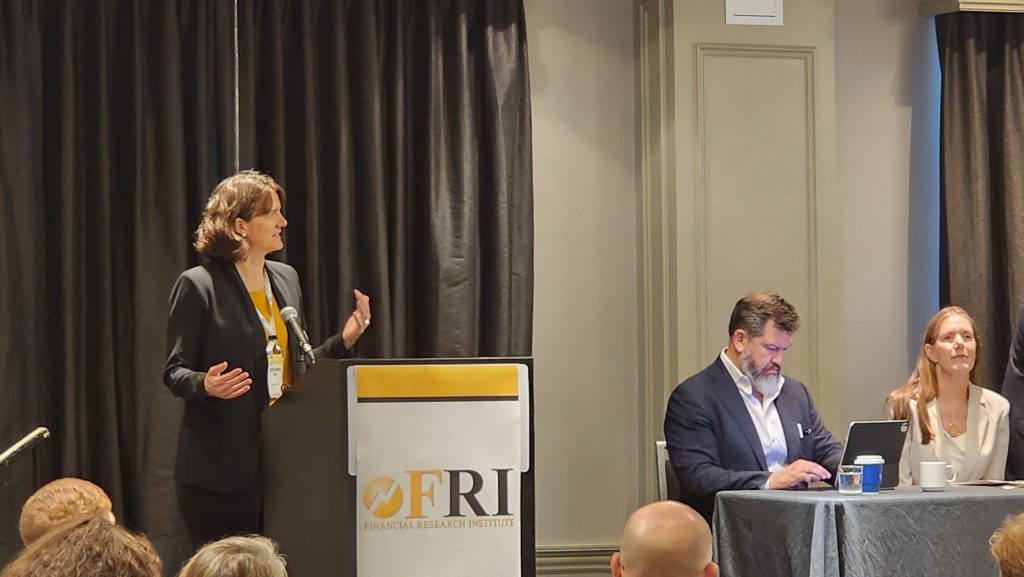
One of the overriding themes of the discussion was the critical need for education in addressing distressed water systems, with utilities, regulators, and local leaders acting as educators to bridge the gap between technical infrastructure needs and customer perception. The importance of educating the public was a point that really hit home for Dandoy during the sale of the City of Butler municipal sewer authority to Pennsylvania American Water.
“I would say clear, honest and open communication, public relations support and workforce retention commitments are the most important factors during (utility) transfers,” he said.
The panel was part of FRI’s mission of serving as an educational partner to NARUC, offering workshops for regulated utilities during the year including the upcoming FRI Annual Public Utility Symposium on Sept. 23 on the campus of the University of Missouri in Columbia, Missouri.
###